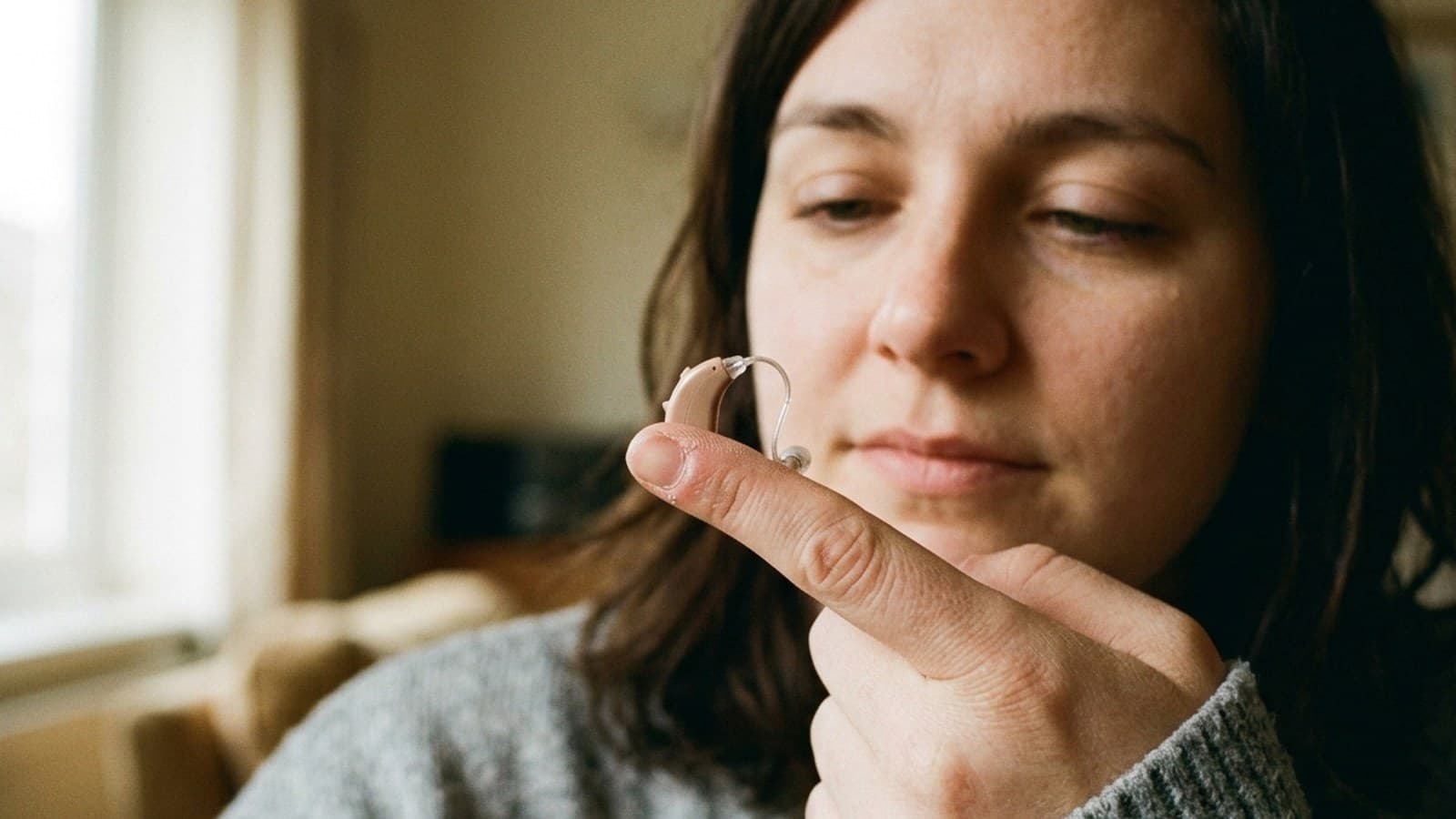
he audiology clinic quoted $4,400 for a pair of hearing aids. The devices inside that quote cost the clinic a fraction of it — the rest is the exam, the fitting, the adjustments, and the follow-ups, bundled into one number nobody itemizes. Since October 2022, federal rules let you buy the hardware over the counter. For the right ear, that's a $2,000+ saving. For the wrong ear, it's money wasted on a device that can't help.
The FDA's over-the-counter hearing aid rule created a legal category for adults 18 and older with perceived mild-to-moderate hearing loss: trouble following conversation in noise, TV volume creeping up, asking people to repeat themselves. No prescription, no exam, no audiologist required. That last part is the trap — the rule removed the gatekeeper, not the reasons the gatekeeper existed.
First: find out which ear you actually have
“Perceived” mild-to-moderate loss is self-diagnosis, and self-diagnosis of hearing is unreliable — loss creeps in over years, and one-sided or asymmetric loss is easy to miss. A real audiogram is a cheap cash test in Austin, and it settles the lane question: mild-to-moderate and symmetric puts OTC on the table; severe, one-sided, or oddly-shaped loss means the clinic path was never optional for you.
What the money buys in each lane
Prescription aids bought through a clinic typically run $2,000–$7,000 per pair, and that price is a bundle: the devices, plus fitting to your audiogram, plus a service relationship — adjustments, cleanings, reprogramming as your hearing changes. OTC aids run roughly $200–$1,700 per pair, self-fit through a phone app, with support that ranges from real (the better direct-to-consumer brands staff audiologists and take phone-based fittings) to nonexistent.
Two honest caveats before the cheap number wins automatically. One: cheap OTC devices without real self-fitting software are amplifiers with marketing — if it doesn't adjust to a hearing profile, it isn't doing the job. Two: the bundle has real value for some people. If you want a professional watching your hearing over years, or self-fitting through an app sounds miserable, the clinic lane is a service you're choosing, not a scam you're escaping.
The playbook
- 1Get the audiogram
Cash price in Austin below. Ask for a copy of the chart — it's yours, and the better OTC brands can use it.
- 2Match the lane
Mild-to-moderate, both ears, no red flags → OTC is legitimate. Anything else → clinic path, and price that bundle across two or three providers.
- 3Buy on returns, not ads
The OTC lane's real consumer protection is the trial window. Take 45+ day return policies seriously; skip anything under 30.
- 4Re-test when things change
Hearing drifts. If devices stop keeping up, that's an audiogram question, not a volume question.
We keep a short, disclosed list of DTC hearing, sleep, and home-health services — including who they're actually for — on one page.
See the devices shelf →- Are OTC hearing aids legal without seeing a doctor?
- Yes. Since October 2022, FDA rules allow adults 18+ with perceived mild-to-moderate hearing loss to buy hearing aids over the counter, no exam or prescription required. The rule does not cover children or severe loss.
- How do I know if my loss is “mild to moderate”?
- You don't, reliably, without a hearing test — that's the honest limit of the OTC category. An audiogram is a cheap cash test in Austin and tells you whether OTC devices can actually help your pattern of loss.
- Why are clinic hearing aids so much more expensive?
- The quote bundles the devices with professional services: fitting to your audiogram, adjustments, cleanings, and follow-up over years. The hardware is a minority of the number. Whether that service layer is worth $2,000+ to you is the real decision.